
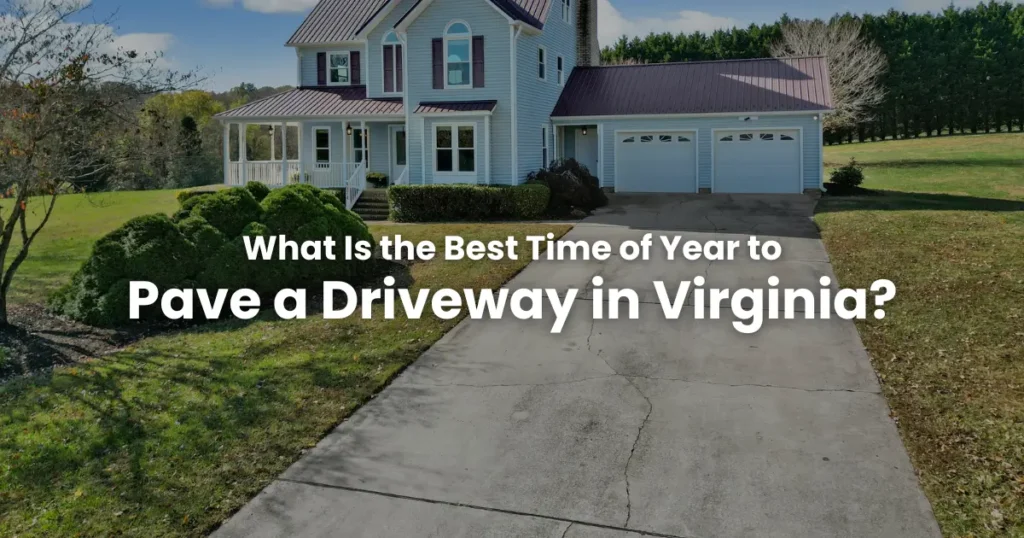
What Is the Best Time in Virginia to Pave a Home Driveway?
If you’re planning a new asphalt driveway, one of the first questions you probably want to ask is- “What is the best time of year to pave a driveway in Virginia?”
The ideal paving season for homeowners in Virginia typically runs from April through October, between late spring and early fall, when temperatures remain consistently above 50°F and weather conditions allow asphalt to be properly installed and compacted. Warm weather allows asphalt to stay workable long enough for proper placement and compaction. Proper compaction is one of the most important factors affecting the strength, durability, and lifespan of an asphalt driveway. While paving can sometimes be completed outside these months, spring through fall usually provides the most favorable conditions for a long-lasting asphalt surface.
However, the season alone does not determine whether a driveway will last 5 years or 25 years. The condition of the existing driveway, drainage, base preparation, weather patterns, and installation quality all play a major role in the long-term performance of asphalt pavement.
Gallaher Seamless Paving has worked on residential and commercial asphalt paving projects throughout Loudoun County, Fauquier County, Prince William County, Fairfax County, Warrenton, Gainesville, Haymarket, Middleburg, and surrounding Northern Virginia communities. The recommendations in this guide are based on real paving conditions commonly encountered throughout the region After evaluating and paving driveways throughout Northern Virginia, we’ve found that the best results come from combining the right weather conditions with proper site preparation and professional installation.
In this article, you’ll learn:
- How to determine if this is the right year to pave your driveway
- The best months to pave a driveway in Virginia
- Why temperature matters for asphalt paving
- Whether spring, summer, or fall is best
- When you should avoid paving
- How contractor scheduling affects project timing
- What homeowners often overlook before replacing a driveway
Why Temperature Is Essesntial Factor for Asphalt Paving
Asphalt is installed while it is hot. From the moment asphalt leaves the plant, it begins cooling. Contractors must place, level, and compact the material before it cools below recommended temperatures. When temperatures are too cold, asphalt cools faster. This reduces the amount of time available to achieve proper compaction.
Poor compaction can lead to premature cracking, surface deterioration, reduced pavement life, water infiltration, and future repair costs.
This is one reason paving professionals and industry organizations such as the Virginia Asphalt Association and the National Asphalt Pavement Association recommend paving during suitable weather conditions, i.e. between April to October, because it allow asphalt to be properly installed and compacted.
Spring, Summer, or Falls, which is The best?
Is Spring Season a Good Time to Pave a Driveway in Virginia?
Spring is one of the most popular times to install an asphalt driveway in Virginia. It is because winter often reveals damage that homeowners may not have noticed before. Cracks, potholes, drainage issues, and edge deterioration become easier to identify after the freeze-thaw cycles of winter.
Spring paving offers several advantages like:
Winter Damage Is Easier to Identify: Many homeowners begin considering driveway replacement after seeing the effects of winter weather. This makes spring an excellent time to evaluate whether repairs, resurfacing, or complete replacement are needed.
The Driveway Has an Entire Warm Season Ahead: A newly paved driveway installed in spring benefits from months of favorable weather conditions after installation.
Contractor Schedules May Be More Flexible: Many homeowners wait until summer to begin searching for paving contractors. Scheduling a site evaluation during spring may provide more flexibility before peak paving demand arrives.
Spring Weather Can Still Cause Delays: Rainfall is often the biggest challenge during spring paving season. While asphalt projects can move quickly, weather conditions may occasionally affect scheduling.
Is Summer the Best Time to Pave a Driveway?
Summer often provides some of the most reliable paving conditions of the year. Warm temperatures help asphalt remain workable longer, allowing paving crews to achieve excellent compaction and smooth finishes. For this reason, many driveway paving projects throughout Northern Virginia are completed during summer.
Benefits of Summer Asphalt Paving:
- Consistently warm temperatures
- Excellent compaction conditions
- Faster project completion
- Reduced risk of cold-weather complications
The Biggest Summer Challenge
The biggest challenge is often contractor availability. Summer is peak paving season throughout Northern Virginia.
Many homeowners wait until summer to request estimates, only to discover that quality contractors are already scheduling weeks in advance. Schedule in advance if you like to get your driveway paving done during summers.
Why Early Fall May Be One of Virginia’s Best Paving Seasons
Many homeowners assume summer is automatically the best season for driveway paving. In reality, early fall often provides some of the most favorable conditions for asphalt installation. Temperatures remain warm enough for proper paving while avoiding some of the extreme heat and scheduling pressure of peak summer months. For many properties, September and October provide excellent paving conditions.
Benefits of Fall Driveway Installation
- Comfortable paving temperatures
- Reliable compaction conditions
- Opportunity to address pavement problems before winter
- Potentially improved scheduling availability
If your driveway has visible deterioration, fall can be an excellent time to complete the project before freezing temperatures return.
Is There a Wrong Time to Pave a Driveway in Virginia?
Rather than asking only when you should pave a driveway, it is also helpful to understand when conditions may be less favorable.
Winter is generally the most challenging time for asphalt paving in Virginia. Cold temperatures can cause asphalt to cool too quickly, reducing the available time for proper compaction. Heavy rainfall, saturated ground conditions, and freezing temperatures can also affect installation quality.
That doesn’t mean every winter paving project is impossible. However, most full driveway installations achieve the best long-term results during the traditional paving season.
The Best Time to Pave Depends on More Than the Season
This is one of the most important things homeowners should understand. A driveway paved during perfect weather can still develop problems if underlying issues are ignored. Before recommending a paving solution, experienced contractors evaluate drainage conditions, existing pavement damage, base stability, water flow patterns, surface grading, edge support, and traffic exposure.
In many cases, these factors have just as much impact on driveway life as the season in which it is installed.
Request a Professional Driveway Evaluation
Not sure whether your driveway needs repairs, resurfacing, or complete replacement?
A professional site evaluation can identify existing problems before they become more expensive to correct later.
Gallaher Seamless Paving provides driveway evaluations throughout Northern Virginia and can help determine the most cost-effective solution for your property.