
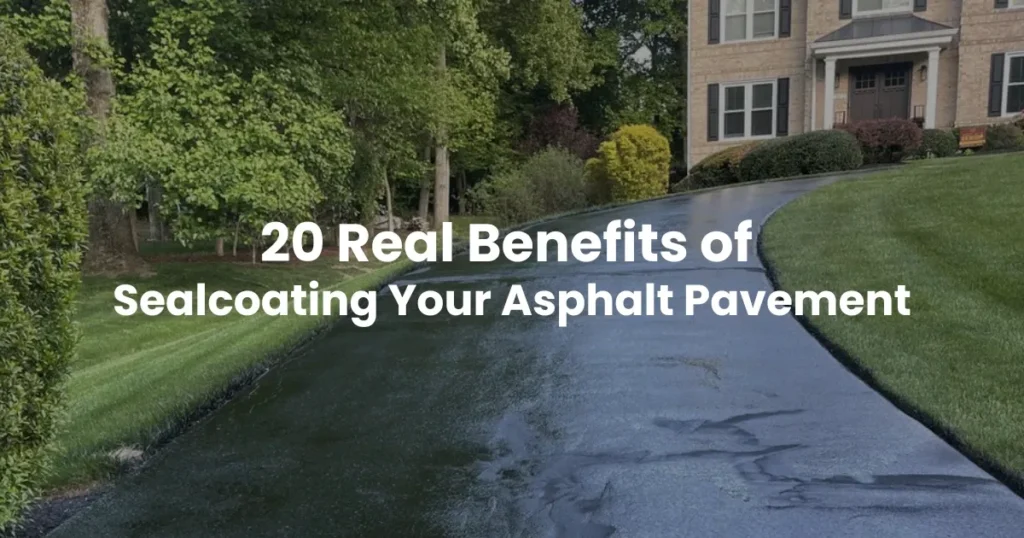
How Sealcoating Protects Asphalt and Helps Prevent Costly Repairs
Sealcoating protects asphalt by adding a thin protective layer over the pavement surface. This layer helps shield asphalt from sunlight, water, oil, gasoline, traffic wear, and weather exposure. It does not rebuild damaged pavement, but it helps slow down the damage that causes asphalt driveways, parking lots, private roads, and blacktop surfaces to break down over time.
Continue reading this article below where we explain why pavers recommend sealcoating asphalt surfaces.
The Real Benefits of Sealcoating Your Asphalt Pavement
Sealcoating Protects Asphalt From UV Rays and Sun Damage
Sunlight is one of the biggest reasons asphalt ages and deteriorates. Ultraviolet (UV) rays slowly break down the oils and binders that hold asphalt together. As these materials dry out, the pavement becomes harder, more brittle, and more likely to crack under traffic and changing temperatures.
Asphalt sealcoating creates a protective layer between the pavement and direct sunlight. This protective coating helps slow the damage caused by UV exposure and reduces the rate at which asphalt loses its flexibility.
Without routine sealcoating, driveways, parking lots, and private roads often fade from deep black to gray and begin developing surface cracks much sooner.
Did you notice your asphalt turning gray or showing early cracking?
Contact Gallaher Seamless Paving for a professional pavement evaluation and sealcoating estimate in Northern Virginia.
Sealcoating Slows Oxidation That Causes Asphalt To Become Dry and Brittle
Oxidation happens when asphalt is exposed to air and sunlight over time. As oxygen interacts with the pavement surface, it gradually removes the oils that keep asphalt flexible. This process causes asphalt to lose elasticity. Instead of bending slightly under traffic and temperature changes, the pavement becomes stiff and more vulnerable to cracking.
Sealcoating helps slow oxidation by creating a protective barrier that reduces direct exposure to air and sunlight. This helps preserve the materials that give asphalt its strength and flexibility. The result is pavement that stays in better condition for a longer period of time.
Sealcoating Reduces Water Penetration Into Asphalt
Water is one of the most destructive elements for asphalt pavement. Even small cracks and surface openings allow water to enter the pavement structure. Once moisture gets beneath the surface, it can weaken the base layer that supports the asphalt above.
Asphalt sealcoating helps close minor surface pores and creates a water-resistant barrier. This makes it harder for rainwater and melting snow to penetrate the pavement. Reducing water intrusion helps lower the risk of cracking, surface deterioration, potholes, and base failure.
If water is pooling on your driveway or parking lot, sealcoating alone may not be enough. Schedule an inspection with Gallaher Seamless Paving to determine whether sealcoating, crack filling, or drainage improvements are needed.
Sealcoating Helps Prevent Moisture-Related Damage
Moisture does more than simply sit on the pavement surface. When water repeatedly enters and exits the pavement structure, it weakens the asphalt and the aggregate beneath it. During winter, trapped moisture can freeze and expand, placing additional stress on the pavement.
Sealcoating helps reduce the amount of moisture that can enter the asphalt surface. While it does not make pavement completely waterproof, it significantly reduces the amount of water exposure that contributes to long-term deterioration.
Sealcoating Protects Against Oil, Gasoline, and Chemical Spills
Vehicle fluids can damage asphalt over time. Oil, gasoline, transmission fluid, and other automotive chemicals can soften asphalt binders and weaken the pavement surface. This often leads to stains, soft spots, and premature deterioration.
Sealcoating creates a protective layer that helps limit direct contact between these chemicals and the asphalt itself. While spills should still be cleaned promptly, sealcoating provides an added layer of protection that helps reduce damage.
Sealcoating Reduces Surface Wear From Vehicle Traffic
Every vehicle that drives across asphalt creates friction on the pavement surface. Over time, daily traffic gradually wears away the top layer of asphalt. This wear becomes more noticeable in high-traffic parking lots, commercial properties, and busy driveways.
Sealcoating acts as a sacrificial protective layer. Instead of traffic directly wearing down the asphalt, much of the wear occurs on the sealcoat surface. This helps preserve the pavement beneath the asphalt surface.
Sealcoating Helps Delay Crack Formation
Most asphalt cracks do not appear overnight. They usually begin as tiny surface weaknesses caused by sun exposure, oxidation, water infiltration, and traffic stress.
Sealcoating helps slow the deterioration that leads to these weaknesses. By protecting the pavement from multiple damaging elements at once, sealcoating can help delay the formation of new cracks. It is one of the most effective preventive maintenance services available for asphalt pavement.
Sealcoating Helps Keep Small Cracks From Growing Faster
Small cracks often become large cracks when water, sunlight, and traffic continue to affect the damaged area.
While sealcoating does not repair significant cracks, it can help slow the progression of minor surface deterioration when combined with proper crack filling. For best results, cracks should be repaired before sealcoating is applied.
Already seeing cracks in your driveway or parking lot? Gallaher Seamless Paving provides crack filling and sealcoating services designed to protect asphalt before more costly repairs become necessary.
Sealcoating Helps Slow the Development of Potholes
Potholes usually begin with cracks. Water enters the pavement through damaged areas, weakens the underlying base, and causes sections of asphalt to break apart under vehicle traffic.
By helping reduce water infiltration and slowing pavement deterioration, sealcoating can reduce some of the conditions that contribute to pothole formation. However, sealcoating cannot repair existing potholes.
Sealcoating Protects the Asphalt Binder That Holds Pavement Together
The asphalt binder is the material that acts like glue inside the pavement. It holds the stone, aggregate, and other materials together to create a strong driving surface. When sunlight, water, oxidation, and chemicals attack the binder, it begins to break down. As the binder weakens, the pavement becomes more vulnerable to cracking, raveling, and surface failure.
Sealcoating helps protect the binder from direct exposure to these damaging elements. By preserving the binder, sealcoating helps the entire pavement structure remain stronger for longer.
Sealcoating Helps Extend the Life of Asphalt Pavement
Every asphalt driveway, parking lot, and private road has a limited lifespan. Without maintenance, pavement deteriorates much faster because it is constantly exposed to weather, traffic, and environmental conditions.
Sealcoating helps slow many of the factors that cause asphalt to age. By reducing UV damage, oxidation, water intrusion, and surface wear, sealcoating helps pavement remain serviceable for more years before major repairs become necessary.
Many property owners hire asphalt sealcoating experts for regular blacktop maintenance because it is one of the most cost-effective ways to extend pavement life.
Want to get more years out of your asphalt driveway or parking lot?
Contact Gallaher Seamless Paving for professional sealcoating services throughout Northern Virginia.
Sealcoating Restores Asphalt’s Dark Black Appearance
Fresh asphalt has a rich black color that gives properties a clean and well-maintained appearance. Over time, sunlight and oxidation cause asphalt to fade into a dull gray color. While fading may seem cosmetic, it is often one of the first visible signs that pavement is aging.
Sealcoating restores a darker, more uniform appearance that helps pavement look newer and better maintained.
Sealcoating Improves Curb Appeal
The condition of a driveway or parking lot affects how visitors, customers, tenants, and potential buyers view a property. Faded, cracked pavement can make an otherwise attractive property look neglected. Freshly sealcoated asphalt creates a cleaner and more professional appearance that improves overall curb appeal.
For commercial properties, this can contribute to a stronger first impression for customers and visitors, and homeowners can get higher value for their property.
Sealcoating Creates a More Uniform Pavement Surface
Asphalt surfaces gradually become patchy, faded, and uneven in appearance due to traffic patterns and weather exposure.
Sealcoating helps create a more consistent look across the pavement surface by covering minor surface discoloration and restoring a uniform finish. This results in a cleaner and more visually appealing blacktop surface.
Sealcoating Makes Asphalt Easier to Clean
Unsealed asphalt is more porous and can trap dirt, dust, debris, and stains more easily.
Sealcoating creates a smoother surface that makes routine cleaning easier. Dirt, leaves, and debris are less likely to become embedded in the pavement, helping maintain a cleaner appearance throughout the year.
Sealcoating Helps Reduce Long-Term Maintenance Costs
Major asphalt repairs are significantly more expensive than preventive maintenance. Sealcoating helps reduce long-term maintenance costs by slowing the deterioration that leads to larger repairs. Property owners who follow a regular maintenance schedule often spend less on major rehabilitation work over the life of the pavement.
While sealcoating does require an investment, it is usually far less expensive than repairing widespread pavement damage.
Sealcoating Helps Protect Your Asphalt Investment
Whether it’s a residential driveway, commercial parking lot, HOA roadway, or private road, asphalt paving is a significant investment. Sealcoating helps protect that investment by preserving the condition of the pavement and delaying the need for more costly repairs or replacement.
The goal is not simply to make asphalt look better today, but to help it perform better over time.
Sealcoating Supports a Preventive Pavement Maintenance Program
The most successful pavement maintenance plans focus on prevention rather than waiting for damage to occur. Sealcoating is often one of the core components of a proactive asphalt maintenance program because it helps address many of the environmental factors that contribute to pavement deterioration.
Regular inspections, crack filling, sealcoating, and timely repairs work together to maximize pavement life.
Sealcoating Helps Commercial Properties Maintain a Professional Appearance
Parking lots are often one of the first things customers notice when visiting a business. A well-maintained, freshly sealcoated parking lot communicates professionalism, attention to detail, and property pride. In contrast, faded pavement with visible deterioration can negatively affect first impressions.
For retail centers, office parks, medical facilities, apartment communities, and industrial properties, sealcoating helps maintain a cleaner and more professional appearance.
What Sealcoating Does NOT Do
Many property owners assume sealcoating fixes all asphalt problems. It doesn’t. Understanding what sealcoating cannot do is just as important as understanding what it can do.
Sealcoating Does Not Fix Potholes
Potholes are structural failures caused by water infiltration, weakened pavement, and traffic loading. A thin layer of sealcoat cannot rebuild missing asphalt or repair the damaged base beneath it.
Potholes typically require patching, asphalt repair, or replacement before sealcoating can be applied.
If your pavement already has potholes, Gallaher Seamless Paving can evaluate whether patching, asphalt repair, resurfacing, or replacement is the best solution.
Sealcoating Does Not Repair Large Cracks
Large cracks allow significant amounts of water to enter the pavement structure. Sealcoating is too thin to properly fill these openings and should not be used as a substitute for crack filling. Large cracks should be professionally repaired before sealcoating is applied.
Sealcoating Does Not Correct Drainage Problems
If water consistently pools on your driveway or parking lot, the problem is usually related to grading, slope, drainage design, or pavement settlement. Applying sealcoat over standing water areas will not solve the underlying issue. Drainage problems often require grading corrections, asphalt repairs, or reconstruction of affected areas.
Sealcoating Does Not Fix Structural Pavement Failure
When pavement has severe cracking, base failure, widespread deterioration, or significant settlement, the issue extends far below the surface. Sealcoating only protects the surface layer. It cannot rebuild damaged pavement foundations or restore structural integrity. Asphalt resurfacing or reconstruction may be the better long-term solution in these situations.
Sealcoating Does Not Replace Asphalt Resurfacing or Replacement
There comes a point when asphalt reaches the end of its service life. If pavement is severely deteriorated, heavily cracked, or structurally compromised, sealcoating alone will not restore it.
Professional evaluation can determine whether sealcoating, repairs, resurfacing, or complete replacement is the most cost-effective option.
Not sure whether your asphalt needs sealcoating, repairs, resurfacing, or replacement? Contact Gallaher Seamless Paving for an honest pavement assessment and recommendations tailored to your property in Northern Virginia.
Does Your Asphalt Need Sealcoating?
If your driveway, parking lot, HOA roadway, or commercial pavement is beginning to fade, dry out, or show early signs of wear, sealcoating may help protect it from further damage.
Schedule a pavement assessment with Gallaher Seamless Paving to determine whether sealcoating, crack filling, resurfacing, or asphalt replacement is the right solution for your property.