
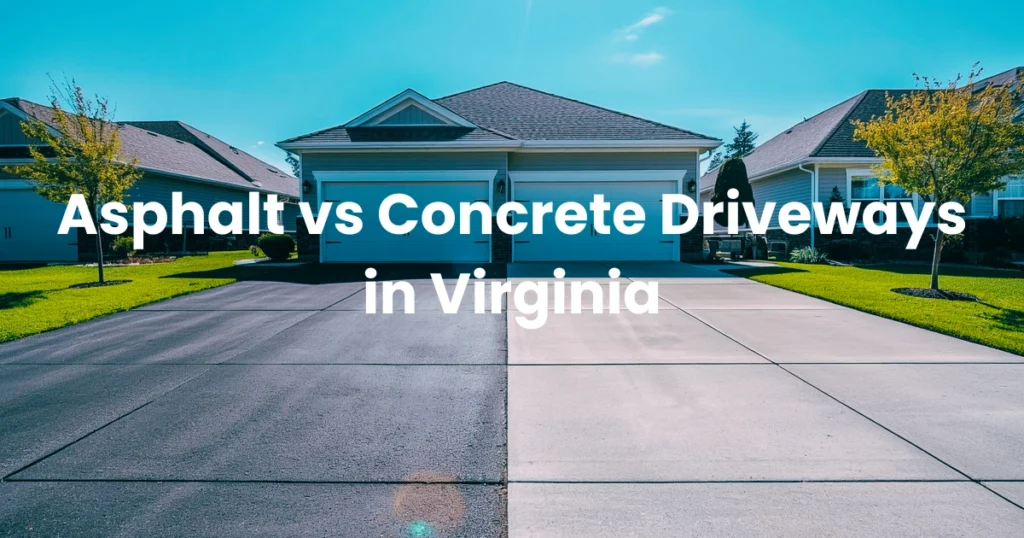
Asphalt vs Concrete Driveways in Virginia: Which Is Better for Your Home?
If you’re planning a new driveway in Virginia, you’ve probably hit the same wall every homeowner does asphalt or concrete?
Both are popular. Both will get the job done. But the “right” answer really depends on your budget, your neighbourhood, and honestly, where in Virginia you live. The climate in Northern Virginia feels nothing like the summers in Richmond or the coastal humidity down in Virginia Beach and that matters more than most people think. So let’s cut through the noise. Here’s everything you need to know, whether to chose asphalt driveway or concrete driveway for your home.
Before we go deep, here’s the short version:
| Feature | Asphalt | Concrete |
| Upfront Cost | Lower ($3–$5/sq ft) | Higher ($6–$10/sq ft) |
| Lifespan | 20–30 years | 30–50 years |
| Virginia Climate Fit | Great | Good, but needs care |
| Maintenance Needs | Moderate (seal every 3–5 yrs) | Low, but repairs are trickier |
| Curb Appeal | Classic, clean | More design options |
| Repair Ease | Easy & cheap | Harder & more visible |
Now let’s get into the details.
How Virginia’s Climate Plays a Big Role
Here’s something that doesn’t get talked about enough: Virginia’s weather is tough on driveways and plays a major role in how long a driveway lasts in Northern Virginia.
You’re dealing with hot, humid summers we’re talking 90°F+ days that can soften asphalt if asphalt driveway installation isn’t done correctly.. Then come winter, temperatures can dip well below freezing, especially in the Shenandoah Valley and the northern parts of the state. That freeze-thaw cycle? It’s brutal on concrete if water sneaks into any cracks. Proper drainage and base preparation can help reduce weather-related damage and extend the lifespan of any driveway.
Asphalt actually handles Virginia’s temperature swings pretty well. It’s flexible, so it expands and contracts without cracking as easily. The downside? On those scorching August days, it can get soft and sticky underfoot if you use cheap materials or skip proper compaction.
Concrete is rigid, which makes it vulnerable to cracking when the ground shifts during freeze-thaw cycles. However, if it’s sealed properly and installed with the right expansion joints, it holds up just fine even in Virginia winters.
Bottom line on climate: For homeowners in areas that see colder winters (Northern VA, the mountains), asphalt has a natural edge. In milder coastal areas, concrete performs beautifully with proper care.
Let’s Talk Money (Because Everyone Does)
Budget is usually the deciding factor, so let’s be real about the numbers.
Asphalt Driveway Costs in Virginia
- Installation: $3 to $5 per square foot
- Average driveway (600 sq ft): $1,800 – $3,000
- Sealcoating (every 3–5 years): $100 – $300
- Crack filling: $50 – $200 as needed
Asphalt costs less upfront sometimes significantly less. And when something goes wrong, repairs are straightforward and don’t look patchy the way concrete repairs often do.
Concrete Driveway Costs in Virginia
- Installation: $6 to $10 per square foot
- Average driveway (600 sq ft): $3,600 – $6,000
- Sealing: Every few years, similar cost to asphalt
- Repairs: More expensive and harder to blend in seamlessly
Concrete costs nearly double upfront, but you’re buying longevity. A well-poured concrete driveway can last 50 years with minimal intervention. Crunch the numbers over time, and the cost gap narrows considerably.
The money verdict: If cash flow is tight, asphalt is the smart short-term choice. If you’re planning to stay in your home long-term, concrete pays off.
Maintenance: What Are You Signing Up For?
Nobody wants a high-maintenance driveway. Here’s the honest truth about upkeep:
Asphalt maintenance tasks:
- Sealcoat every 3–5 years (protects the surface, extends life)
- Fill cracks as they appear
- Watch for edge crumbling if sub-base wasn’t done right
Concrete maintenance tasks:
- Seal every few years to protect from staining and freeze-thaw damage
- Keep deicing salts away they destroy concrete surfaces fast
- Watch for tree root intrusion and control vegetation nearby
Another factor to consider is winter maintenance. In Northern Virginia, road salt and ice melt products are commonly used to improve safety during snowy and icy conditions, but they can be hard on concrete surfaces over time. Asphalt generally tolerates these products better, which can help reduce weather-related wear and extend the life of the driveway.
Curb Appeal: Which Looks Better?
Let’s be honest: when it comes to driveways, looks count.
Asphalt has that clean, classic black look. It blends well with most home styles and landscaping. It’s not flashy, but it looks sharp when freshly sealed.
Concrete wins on versatility. It can be stamped, stained, brushed, or coloured to match your home’s aesthetic. Want a herringbone pattern? A slate grey tint? Exposed aggregate? Concrete can do all of that. It also stays lighter in colour, which some homeowners prefer especially if you live somewhere that gets hot, since lighter surfaces absorb less heat.
Curb appeal verdict: Concrete, hands down, for design flexibility. Asphalt for a timeless, no-fuss look.
Environmental Considerations
This one surprises people: asphalt is actually more recyclable than concrete. Old asphalt can be ground up and reused as base material for new pavement it’s one of the most recycled materials in the U.S.
Concrete has a higher carbon footprint to produce, though it lasts longer, which offsets some of that impact over time. If sustainability matters to you, both materials have trade-offs but asphalt edges ahead on recyclability
So Which One Should You Choose?
Here’s the simplified breakdown:
Go with Asphalt if:
- You want a lower upfront cost
- You’re in a colder part of Virginia (Northern VA, Shenandoah area)
- You use ice melt or road salt in winter
- You want easy, affordable repairs down the line
- You’re okay with a bit of routine maintenance
Go with Concrete if:
- You want maximum longevity (30–50 years)
- You’re focused on curb appeal and design options
- You’re in a milder climate zone of Virginia
- You want lower day-to-day maintenance
- You’re planning to stay in your home long-term
One More Thing to Consider: Installation Quality
Here’s the thing the best material in the world won’t save a poorly installed driveway. Whether you go asphalt or concrete, the quality of the sub-base preparation is what actually determines how long your driveway lasts.
Northern Virginia’s clay-heavy soil is notorious for shifting. A contractor who skimps on grading and base compaction is going to give you a cracked, heaving mess within a few years regardless of whether it’s asphalt or concrete.
Always ask your contractor:
- How deep will the base be?
- What type of gravel sub-base do you use?
- Do you pull permits where required?
- Can I see examples of your recent work?
A reputable Virginia driveway contractor will answer these without hesitation
Final Thoughts
There’s no universal “winner” in the asphalt vs. concrete debate and anyone who tells you otherwise is oversimplifying it.
What there is, is a right choice for your situation. Your budget, your climate zone within Northern Virginia, how long you plan to stay in the home, and what you want your property to look like all of that feeds into the decision.
If you’re still on the fence, get quotes for both from local Northern Virginia contractors. The price difference might make the choice easy. Or you might find that the concrete upgrade is more affordable than you thought.
Either way, you’re now armed with everything you need to make a smart call.
Have questions about driveway installation in Northern Virginia? Drop them in the comments or reach out to a local contractor for a free estimate.