
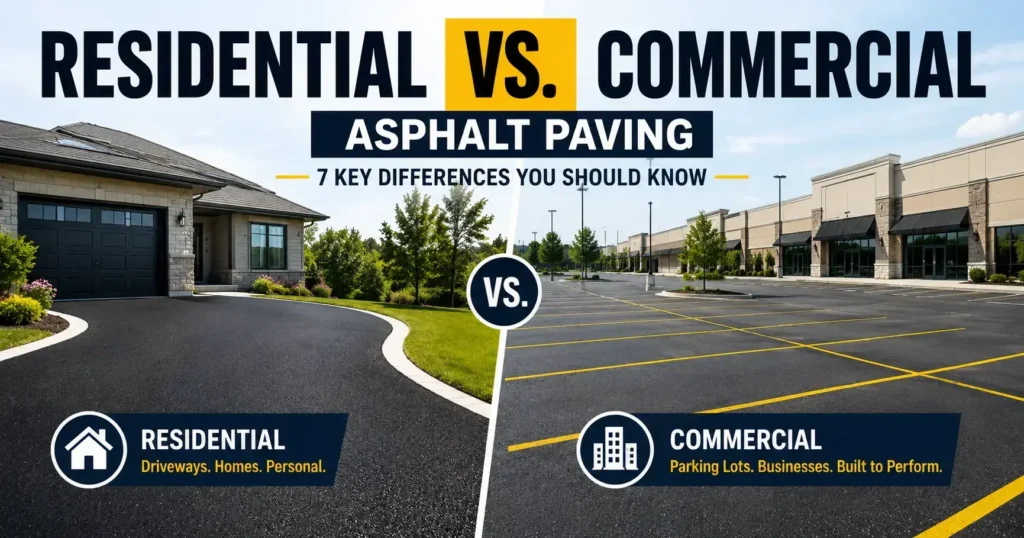
Residential vs. Commercial Asphalt Paving: 7 Key Differences You Should Know
So you need some asphalt work done but you’re not totally sure if your project falls under “residential” or “commercial.” Does it even matter? Short answer: yes, quite a bit.
Whether you’re repaving your driveway or planning a parking lot for your business, the process, materials, and cost can look pretty different. Let’s break it down in plain English so you know exactly what to expect.
What’s the Real Difference Between Residential and Commercial Asphalt Paving?
At the most basic level, residential paving covers driveways, small private walkways, and low-traffic areas around a home. Commercial paving covers parking lots, access roads, loading docks, and other spaces built to handle heavier, more frequent use.
That one distinction how much weight and traffic the surface needs to survive is really the root of every other difference on this list. Here are the seven that matter most.
1. Thickness and Base Preparation
Your driveway doesn’t need to support an 18-wheeler, so it doesn’t get built like one.
- Residential: Usually 2-3 inches of asphalt over a compacted gravel base.
- Commercial: Often 3-6+ inches, with a thicker, more heavily compacted base underneath.
That extra thickness isn’t overkill – it’s what keeps a commercial lot from cracking and rutting under constant heavy loads.
2. Weight and Traffic Load
Think about it: your car weighs a couple thousand pounds. A delivery truck or forklift weighs many times that, and it might roll over the same spot dozens of times a day.
Commercial lots are engineered around that repeated stress which is why they need denser asphalt mixes and stronger bases. Residential driveways just don’t face that kind of daily punishment, so they can be built lighter.
3. Design and Layout Considerations
Residential paving is often about curb appeal matching the driveway to your home’s style, keeping clean edges, maybe adding a nice border.
Commercial paving has a whole different checklist:
- ADA-compliant access ramps and parking spaces
- Proper drainage across large surface areas
- Striping for parking spots, fire lanes, and traffic flow
- Signage placement and lighting considerations
It’s less about looks and more about function, safety, and code compliance.
4. Cost Differences
Naturally, commercial paving tends to cost more per square foot than residential and now you know why. Thicker asphalt, heavier equipment, more prep work, and stricter code requirements all add up.
Pricing varies quite a bit by region and project size, so it’s always worth getting a personalized quote rather than relying on a ballpark figure. But in general, expect commercial jobs to require a bigger investment than a standard driveway repave.
5. Timeline and Project Scale
A residential driveway can often be paved in a day or two sometimes even less if it’s a small area.
Commercial projects are a different story. Bigger lots mean more time, and many businesses need work done in phases or during off-hours so operations aren’t disrupted. A retail parking lot repave, for example, might happen overnight or on weekends to avoid turning away customers.
6. Equipment and Crew Size
You probably won’t see a paver rolling in with a fleet of heavy machinery for your driveway. Residential jobs typically use smaller equipment and a compact crew.
Commercial paving, on the other hand, often calls for larger pavers, rollers, and grading equipment, plus a bigger team to keep a large-scale project moving efficiently and safely.
7. Maintenance Needs
Once the asphalt is down, the upkeep looks different too.
- Residential: Seal coating every 2–3 years, with occasional crack filling as needed.
- Commercial: More frequent maintenance overall, since heavier traffic wears surfaces down faster plus regular striping touch-ups and ADA upkeep to stay compliant.
Staying on top of maintenance is what stretches the life of either type of pavement, but commercial surfaces simply need more attention along the way.
So, Which One Do You Need?
Not sure which category your project falls into? Ask yourself:
- Is this for your home or your business?
- How much daily weight and traffic will the surface handle?
- Do you need code compliance features like ADA access or fire lanes?
Your answers will point you in the right direction and a good paving contractor can help you figure out the rest.
Get a Free Quote for Your Asphalt Paving Project
Whether you’re refreshing your driveway or planning a full commercial parking lot, the right foundation makes all the difference. Reach out to the Gallaher team today for a free quote, and we’ll help you choose the right paving solution with confidence.