
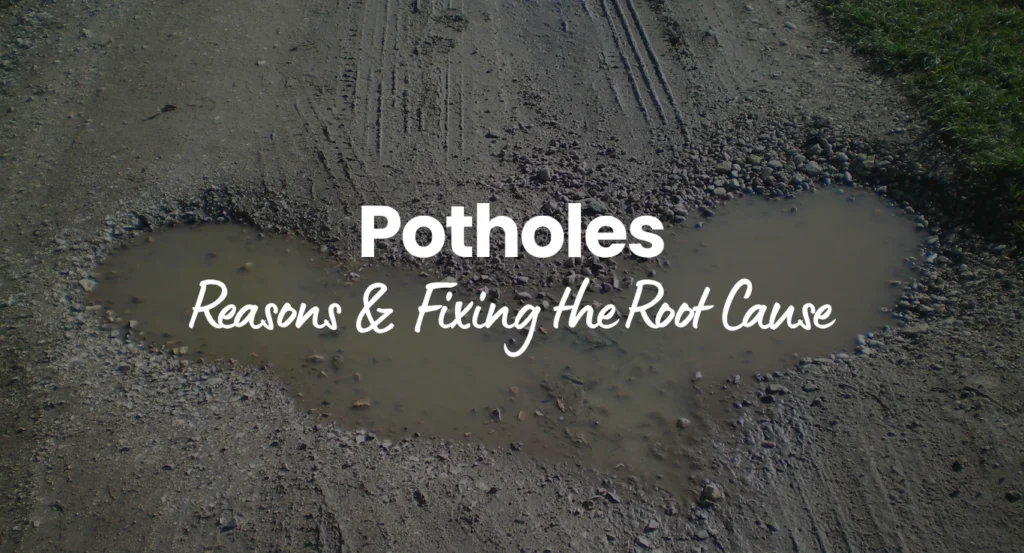
What Causes Potholes in Asphalt Surfaces?
Potholes in asphalt surfaces are usually caused by water getting into the pavement and weakening the base underneath it. As vehicles continue driving over the weakened area, the asphalt begins to crack, break apart, and eventually form a pothole. Poor drainage, existing cracks, freeze-thaw cycles, weak base materials, poor compaction, aging asphalt, and repeated traffic can all contribute to pothole formation.
These problems can affect residential driveways, parking lots, private roads, and commercial asphalt surfaces. The severity depends on the condition of the pavement, the underlying base, drainage, traffic, and how long the problem has been present.
How Do Potholes Form in Asphalt Surface?
A pothole usually starts with a weakness within the asphalt or underneath it. Water gets into the pavement through cracks, edges, or drainage problems and can weaken the material supporting the driveway. Once that support is compromised, repeated vehicle traffic puts pressure on the weakened area until the asphalt cracks and breaks apart.
Here are the most common reasons this happens:
1. Water Gets Under the Asphalt
Water is one of the biggest causes of asphalt potholes. When rainwater gets through cracks or other openings in the pavement, it can reach the base and soil underneath the driveway. Saturated materials can lose strength and provide less support for the asphalt above them. As vehicles continue to drive over the weakened area, the pavement can begin to crack and break apart.
2. Poor Drainage Allows Water to Stay Under the Asphalt Surface
A paving needs proper drainage to move water away from the pavement. If water collects around or underneath the surface, the base can remain wet for extended periods. Over time, this can weaken the supporting material and contribute to cracking, settlement, and potholes.
If a pothole repeatedly develops in the same area, drainage should be one of the things examined.
3. Cracks Allow Water to Enter the Pavement
Cracks give water a direct path into the pavement structure. Once water gets through the asphalt, it can reach the underlying base and weaken the support beneath the cracked area. Traffic then puts additional pressure on the damaged pavement, causing the crack to widen and the surrounding asphalt to break apart. This is one reason small cracks should not simply be ignored.
4. Freezing Winter Cycles Can Create Potholes
Freeze-thaw cycles can put additional stress on an asphalt driveway. When water gets into cracks or the pavement structure and freezes, it expands. When temperatures rise and the water thaws, the material underneath can be left weakened or displaced. As vehicles drive over the affected area, the weakened asphalt can begin to break apart and form a pothole.
5. A Weak or Failing Base Can Cause Potholes
Asphalt needs a stable base underneath it to handle vehicle loads. If the base or subgrade is weak, poorly compacted, unstable, or affected by excess moisture, the pavement can lose the support it needs. The asphalt may then crack, settle, or break under repeated traffic. A pothole that keeps returning in the same location can sometimes indicate a problem underneath the surface rather than a problem with the asphalt alone.
6. Poor Compaction Can Lead to Premature Potholes
Proper compaction is an important part of asphalt installation. If asphalt is not compacted properly, it can have higher air voids and allow water and air to move through the pavement more easily. This can contribute to premature deterioration and make the pavement more vulnerable to potholes. Proper installation and compaction help create a stronger, more durable asphalt surface.
7. Aging Asphalt Becomes More Vulnerable
As asphalt gets older, it naturally becomes less flexible. The asphalt binder can harden over time, making the pavement more susceptible to cracking and surface deterioration. Once cracks develop, water has more opportunities to enter the pavement and affect the supporting materials underneath. Aging asphalt does not automatically mean potholes will form, but older pavement is generally more vulnerable when combined with water, traffic, drainage problems, and other sources of stress.
8. Repeated Traffic Breaks Down Weakened Areas
Traffic is often what turns an existing weakness into an actual pothole. A properly constructed and supported driveway can handle normal vehicle loads. But when water has weakened the base, cracks have opened the pavement, or the asphalt has already deteriorated, repeated traffic places additional stress on that area. Eventually, the damaged asphalt can break apart and leave a pothole.
Why Do Potholes Get Bigger Over Time?
Potholes usually become larger because the conditions that created them continue to affect the pavement. Water can collect inside the damaged area and reach deeper into the pavement. Vehicle tires repeatedly put pressure on the weakened edges, causing more asphalt to break away.
That is why a small pothole can become significantly larger if the underlying problem is not addressed.
Why Do Potholes Keep Coming Back after Repairs?
Potholes often come back when the underlying cause has not been fixed. If the same area keeps developing potholes, simply filling the hole may not solve the larger problem. The surrounding pavement and the material underneath should also be evaluated
Common reasons could be:
- The drainage problem is still present.
- Water continues getting underneath the pavement.
- The base underneath the asphalt has failed.
- Cracks around the repaired area continue allowing water in.
- The surrounding pavement is also deteriorating.
How Does Gallaher Seamless Paving Evaluates Asphalt Potholes

Being a licensed asphalt paving company serving Northern Virginia with more than 10 years of experience we examine the surrounding pavement, existing cracks, drainage, settlement, and signs that the area underneath has become weak or unstable, and not just the pothole.
We look for the root cause of the pothole so we can determine what is actually happening with the pavement. Depending on the condition of the surface and what is happening underneath, the right solution could be a localized asphalt repair, asphalt overlay, full asphalt removal and replacement, or a new asphalt installation.
Gallaher Seamless Paving provides residential driveway paving and repairs, commercial asphalt paving, parking lot paving, asphalt and blacktop paving, asphalt overlays, full asphalt replacement, and new asphalt installation throughout Northern Virginia. We work with both residential and commercial properties, so whether you are dealing with potholes in a driveway, parking lot, private road, or another paved surface, the first step is understanding why the pavement is failing.
Is Your Asphalt Surface Developing Potholes?
If potholes are becoming a recurring problem or you are also seeing cracking, sinking, standing water, or uneven areas, it may be time to have the driveway evaluated.
Gallaher Seamless Paving can inspect your asphalt driveway, identify the likely cause of the potholes, and recommend the appropriate next step.