
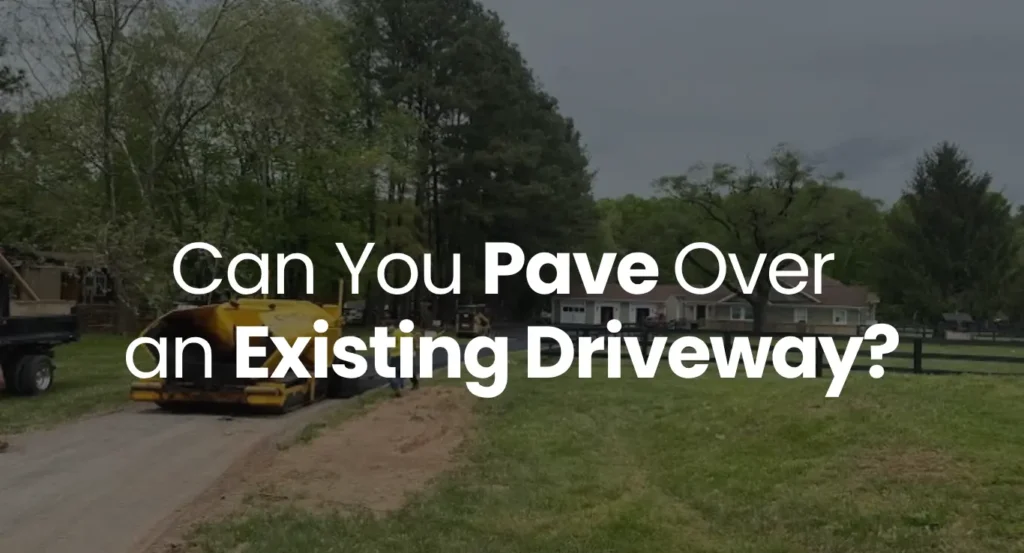
Can You Pave Over an Existing Asphalt Driveway Surface?
Yes, you can pave over an existing asphalt driveway if the existing pavement and base are structurally sound. This process is called an asphalt overlay or driveway resurfacing. Instead of removing the entire driveway, a new layer of asphalt is installed over the existing pavement. An overlay can be a good option when the existing driveway has minor surface damage, good drainage, and no major sinking, potholes, or widespread alligator cracking. If the base has failed or the driveway is unstable, paving over it will not fix the underlying problem. The damaged pavement and failed base may need to be removed and rebuilt before new asphalt is installed.
What Does It Mean to Pave Over an Existing Driveway?
Paving over an existing driveway means installing new asphalt directly over the old asphalt instead of removing the entire driveway first. The old pavement remains underneath and becomes part of the pavement structure. The existing surface is prepared, damaged areas are repaired, and the new asphalt is placed over it.
This is different from a full driveway replacement as it required milling and grading. With a replacement, the existing asphalt is removed and the contractor can address problems in the base and soil before rebuilding the driveway. With an asphalt overlay, the existing pavement stays in place. That is why professional paving contractors examine the condition of the existing driveway before deciding to choose the best solution.
Industry guidance for asphalt overlays recommends repairing failed areas before the new asphalt is placed. Severe pavement failures should not simply be covered with another layer of asphalt.
When Can You Pave Over an Existing Driveway?
You can usually pave over an existing driveway when the damage is mainly at the surface and the pavement underneath is still stable. A good surface for an asphalt overlay generally has the following conditions:
1. The Existing Base Is Stable
The base underneath the asphalt needs to be strong enough to support the new pavement. If the driveway is firm and stable without significant movement, sinking, or soft areas, an overlay may be appropriate.
The important point is that new asphalt cannot turn a weak base into a strong one. If the pavement is failing because the underlying base or soil has moved, the problem needs to be corrected before installing a new surface.
2. The Driveway Has Minor Surface Damage
An asphalt overlay can work well over a surface when the driveway has problems such as faded or oxidized asphalt, light surface wear, minor pitting, small surface cracks, a rough or worn driving surface, or general deterioration of the top layer.
These are different from structural failures. If the driveway is still firm but simply looks old and worn, resurfacing may be a practical alternative to complete replacement.
3. There Are No Major Potholes or Sunken Areas
Small surface defects can often be repaired as part of the preparation. Large potholes and sunken sections are different. A pothole can indicate that water has reached the pavement structure or that the underlying material has failed. A sunken section can indicate movement in the base or soil.
Those problems should be corrected rather than simply covered with new asphalt. The Asphalt Pavement Technology Program’s guidance specifically recommends repairing potholes and failed areas before an overlay and removing and rebuilding areas with severe structural distress.
4. The Driveway Has Good Drainage
Good drainage is important for an asphalt overlay. Water should have a clear path away from the driveway rather than collecting on the surface or underneath the pavement.
If the existing driveway has standing water, poor grading, or drainage problems, adding new asphalt does not automatically solve them. The drainage problem should be addressed first.
5. There Is Enough Elevation for the New Asphalt
An asphalt overlay adds thickness to the existing driveway. That means the finished driveway will be higher than it is today. The contractor needs to check the transitions around garagfe doors, sidewalks, curbs, driveway edges, drainage areas, and the connection to the street.
A driveway may be structurally suitable for an overlay but still not be a good candidate if adding asphalt creates a problematic transition or interferes with drainage. This is one reason an on-site evaluation is important before deciding to resurface an existing driveway.
When Should You Not Pave Over an Existing Driveway?
You should not pave over an existing driveway when the problems underneath the surface are more serious than the new asphalt can solve.
1. Widespread Alligator Cracking
Widespread alligator cracking is one of the biggest warning signs. These are interconnected cracks that create a pattern similar to an alligator’s skin.
They often indicate that the pavement is experiencing structural failure rather than simple surface aging. Covering widespread structural cracking with new asphalt does not remove the movement underneath it. The existing failure can eventually reflect through the new overlay.
To learn why your driveways started showing cracks, read our article: Top Reasons Why Asphalt Driveways Crack in Northern Virginia Weather
2. Deep Potholes
You should not simply pave over deep potholes.The pothole needs to be repaired, and the reason it developed should be considered. If the surrounding pavement or base has failed, that section may need to be removed and rebuilt before resurfacing.
3. Sinking or Uneven Areas
A driveway that is sinking is usually telling you something about the material underneath it. The cause could involve the base, subgrade, drainage, settlement, or another underlying problem. A new layer of asphalt follows the existing structure. It does not correct the reason that surface is sinking.
4. A Soft or Failed Base
A soft area is a serious concern. If the pavement moves, flexes, or has lost support underneath it, an overlay may only hide the problem temporarily. The failed material needs to be identified and corrected before a new surface is installed.
5. Serious Drainage Problems
If water is consistently collecting on or around the driveway, the drainage issue should be addressed first. Water can weaken pavement support and contribute to cracking, potholes, and settlement.
An asphalt overlay should be installed over a properly prepared and stable surface, and not used to cover an ongoing water problem.
6. The Existing Driveway Already Has Multiple Overlays
Having an older overlay does not automatically mean another overlay is impossible. Instead, the contractor should look at the total pavement condition, existing thickness, structural condition, surface elevation, and available clearance. If the driveway has been resurfaced several times and there is no longer enough room for another layer, or the pavement underneath is deteriorating, full replacement may make more sense.
The decision should be based on the condition of the pavement, and not simply the number of times it has been resurfaced.
Can You Pave Over Cracked Asphalt?
Yes, you can sometimes pave over cracked asphalt, but the type and extent of damage done to the surface needs to be examined first. Small surface cracks are very different from widespread structural cracking. Minor surface cracks may be repaired during preparation before an overlay. Wide, deep, interconnected, or moving cracks require more investigation because they can indicate a problem underneath the asphalt.
For example:
- Small hairline cracks: May be manageable before an overlay.
- Larger linear cracks: Need to be evaluated and repaired.
- Wide or deep cracks: May indicate movement or structural problems.
- Alligator cracking: Often indicates deeper pavement failure.
- Cracks around sunken areas: May point to settlement or base problems.
An important issue with asphalt overlays is reflective cracking. If the old pavement continues to move or has unresolved structural cracks, those cracks can eventually appear through the new asphalt. Proper preparation can reduce this risk, but an overlay cannot guarantee that every existing crack will stay hidden permanently.
Can You Pave Over a Driveway With Potholes?
You should not simply cover potholes with new asphalt. The potholes should be properly repaired first. The repair may involve removing damaged asphalt, correcting the underlying material, addressing water or drainage problems, and compacting the repaired area before the overlay is installed.
If there are only a few isolated failed areas, those areas may be repaired while the rest of the driveway remains suitable for resurfacing. If potholes are widespread, however, that may be evidence that the driveway has a larger structural problem.
Does an Asphalt Overlay Require Preparation?
Yes. A proper asphalt overlay requires preparation before the new asphalt is installed. The old driveway should not simply be covered without addressing existing problems. Depending on the condition of the pavement, preparation may include:
- Cleaning the existing surface.
- Repairing potholes and failed areas.
- Addressing significant cracks.
- Correcting low or damaged sections.
- Addressing drainage problems where necessary.
- Checking grades and transitions.
- Preparing the surface for proper bonding.
- Installing and compacting the new asphalt correctly.
As per The Asphalt Pavement Technology Program an existing asphalt should be properly prepared, with defects repaired and the surface cleaned before an overlay. A tack coat is also used to help bond the new asphalt to the existing pavement.
So, an asphalt overlay is not simply “putting new asphalt over old asphalt.” The preparation underneath the new surface is a major part of the job.
Should You Overlay or Replace Your Driveway?
Choose an asphalt overlay when the existing driveway is structurally sound and the main problems are at the surface.
An overlay may make sense when:
- The base is stable.
- The driveway is not sinking.
- There are no widespread structural cracks.
- Drainage is working properly.
- Major potholes are not present.
- Surface wear is the main problem.
- There is enough elevation for the additional asphalt
Full replacement becomes more appropriate when:
- The base has failed.
- Large areas are sinking.
- Widespread alligator cracking is present.
- Potholes are recurring.
- The pavement is unstable or breaking apart.
- Drainage problems are contributing to pavement failure.
- The existing structure cannot support another overlay
The decision should be based on what is happening underneath the surface, not just how the driveway looks from above.
What Does Gallaher Seamless Paving Check Before Recommending an Overlay?

Before recommending an asphalt overlay, Gallaher Seamless Paving evaluates the condition of the existing driveway and the site around it. We look at the pavement surface, cracking, potholes, settlement, drainage, grading, edges, and overall stability. We also consider how adding new asphalt will affect the driveway’s connection to the garage, sidewalks, curbs, and street.
We don not recommend an overlay simply because it requires less work.Our goal is to determine whether resurfacing, repairs, or full driveway replacement is the right solution for your property.
A good asphalt contractor should tell you when an overlay makes sense, and when it does not.
Not Sure If You Need an Asphalt Overlay or a New Driveway?
Gallaher Seamless Paving can evaluate your existing driveway, identify structural and drainage problems, and explain whether an asphalt overlay, repairs, or full replacement makes sense for your property.
If you are planning a driveway project in Northern Virginia, request an evaluation before deciding to pave over your existing driveway.
If you are not sure whether your current driveway needs resurfacing or replacement, see our guide: 7 signs that an asphalt driveway needs to be replaced.