
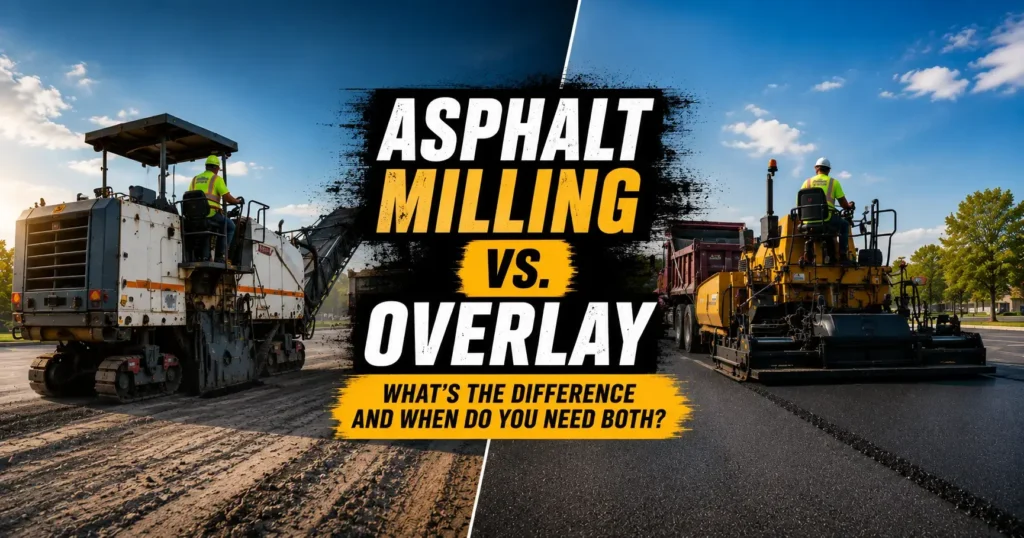
Asphalt Milling vs. Overlay: What’s the Difference and When Do You Need Both?
If you’ve started researching parking lot repairs, you’ve probably run into two terms that seem to get thrown around a lot: milling and overlay. Sometimes contractors mention them like they’re separate solutions. Other times, they get bundled together as if they’re one thing. So which is it?
Think of them as two different ways of tackling the same problem. They each have their own purpose, and in many cases, using both together can give you the best result. The tricky part is knowing which one you actually need so you’re not wasting money on a fix that doesn’t address the real issue.
Let’s make it simple and walk through what each one does.
Quick Definitions: What Do These Terms Actually Mean?
What Is Asphalt Milling?
Milling is the process of grinding off the top layer of damaged asphalt using a machine called a milling machine. It removes the worn, cracked, or uneven surface while leaving the solid base underneath intact, kind of like sanding down a scratched surface before refinishing it.
What Is an Asphalt Overlay?
An overlay is exactly what it sounds like: a new layer of fresh asphalt laid directly on top of the existing pavement. Instead of removing anything, it adds a new surface over what’s already there, giving you a smoother, updated look and added protection.
So What’s the Actual Difference?
The easiest way to understand the difference is to look at what each process actually does to your pavement.
| Milling | Overlay | |
|---|---|---|
| What it does | Removes the old, damaged surface layer | Adds a new layer of asphalt on top of the existing surface |
| Best for | Cracked, rutted, or uneven pavement | Pavement with minor wear and no grading issues |
| Effect on curb/drain height | Keeps pavement height consistent | Raises the overall pavement height |
| Typical cost | Moderate | Lower, when used on its own |
Milling takes away damaged material. Overlay adds new material. That’s the core distinction, and it’s exactly why they’re often used together rather than as competing options.
When You Only Need an Overlay
An overlay on its own can be a smart, budget-friendly choice when:
- Your pavement has minor cracking or surface fading, but nothing structural.
- There are no drainage or grading issues to correct.
- The base underneath is still solid and stable.
- You’re looking for a cost-effective refresh rather than a full repair.
If your lot is in relatively good shape and just needs a visual and protective upgrade, overlay alone might be all you need.
When You Only Need Milling
This one’s less common, but it does happen usually when a lot needs the damaged layer removed and isn’t ready for a new overlay just yet, or when milling is being used as a standalone leveling fix. More often, though, milling is the first step in a larger plan, setting the stage for what comes next.
When You Need Both Mill and Overlay
Here’s where things get important, because this combination is one of the most common (and most effective) approaches in pavement maintenance.
Milling before applying an overlay solves a problem that overlay alone can’t fix: it removes the damaged asphalt before adding new material, instead of just layering new asphalt over old cracks and unevenness.
You’ll likely need a mill-and-overlay combo if:
- Your pavement has moderate cracking or surface damage (not just cosmetic wear).
- Curbs, drains, or manhole covers are starting to look buried under built-up layers of old asphalt.
- The surface is uneven or has developed dips and high spots.
- You want to maximize the lifespan of the repair, not just patch the appearance.
This combo essentially gives you a clean slate to build on, without the cost of a full-depth reconstruction.
What Happens If You Skip Milling and Just Overlay?
It’s tempting to skip milling to save money upfront, but doing an overlay without milling first can backfire.
Here’s why: if the damaged layer underneath isn’t removed, cracks and imperfections often “reflect” back through the new overlay within a year or two. Moisture can also get trapped between the old and new layers, weakening the pavement from within. And since overlay adds height rather than removing it, skipping milling can raise your pavement to the point where curbs, drains, and door thresholds start causing drainage or accessibility issues.
In short: overlay without milling can look like a fix in the short term, but it often just delays a bigger problem.
Cost Comparison Overlay vs. Mill and Overlay
Costs will vary depending on your lot’s size, the extent of the damage, and local rates, but here’s the general idea:
- Overlay alone tends to be the more affordable option upfront, since it skips the removal step.
- Mill and overlay costs more than overlay alone, but significantly less than a full repave, while delivering a much longer-lasting result.
If your pavement genuinely only needs a surface refresh, overlay alone can be a smart way to save. But if there’s underlying damage, spending a bit more on milling first will save you from repeat repairs down the line.
How Long Does Each Option Last?
- Overlay alone: Typically adds a few years of life, especially useful for lots with only minor, surface-level wear.
- Mill and overlay: Can extend pavement life significantly longer, since it addresses both the surface and the underlying condition of the pavement.
If you’re trying to get the most mileage out of your investment, mill and overlay is generally the stronger long-term choice when there’s any real damage present.
frequently question answer
Still Not Sure Which Option Is Right for You?
Milling and overlay aren’t competing solutions; they’re often two steps in the same plan. The right choice really depends on what’s happening below the surface, and that’s something only a proper inspection can tell you for sure.
If your parking lot is showing signs of wear, the smartest move is getting it assessed before deciding between overlay alone or the full mill-and-overlay approach. A little diagnosis now can save you a lot of repair costs later.