
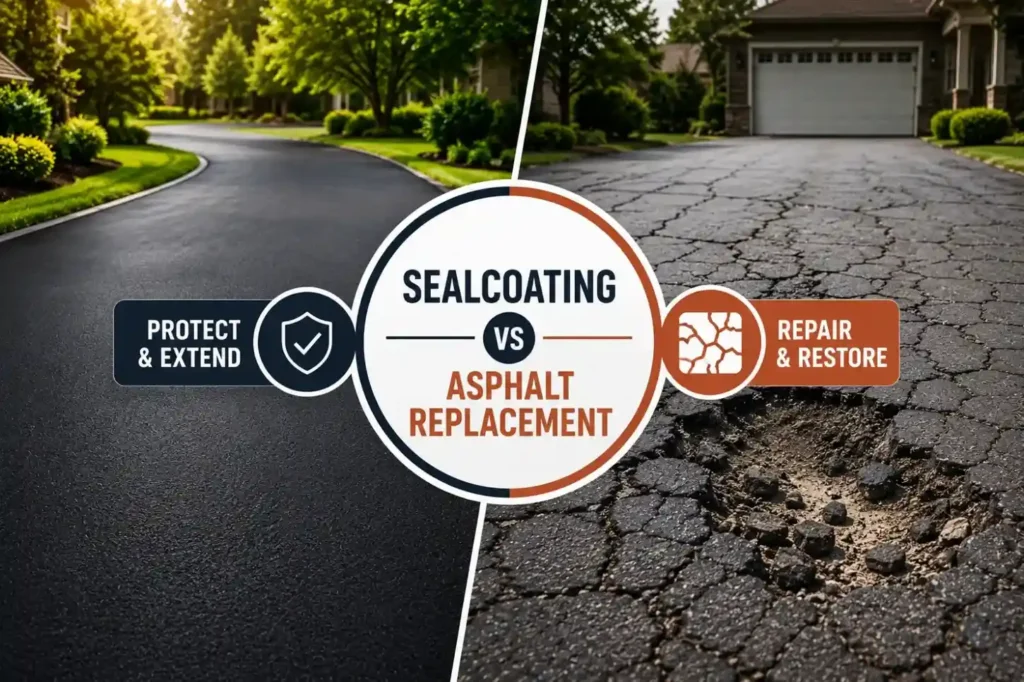
Sealcoating vs Asphalt Replacement: Which One Does Your Driveway Actually Need?
If your asphalt is only showing surface wear, fading, or a few small cracks, sealcoating is often the right choice.
It protects the pavement, slows down future damage, and helps extend its lifespan.
If the surface has deep cracks, potholes, widespread crumbling, or areas that are sinking, replacement is usually the smarter long-term investment because the pavement has likely developed structural damage that sealcoating cannot fix.
The difficult part isn’t choosing between the two services. It’s knowing which condition your asphalt is actually in.
This guide will help you identify the difference before you spend money on repairs that may not solve the proble.
The Right Approach: Don’t Start With the Solution, Start With the Condition
One of the biggest mistakes property owners make is deciding on a service before understanding what’s actually happening to their asphalt.
A faded driveway and a driveway filled with potholes may both look worn, but they don’t have the same problem. One may simply need routine maintenance to protect the pavement, while the other may have structural damage that maintenance alone can’t fix.
That’s why professional paving contractors don’t begin by recommending sealcoating or replacement. They begin by inspecting the condition of the asphalt.
The goal isn’t to sell the bigger job. The goal is to choose the solution that makes the most sense for the pavement you already have.
When Sealcoating Is Usually the Right Choice
Sealcoating works best when the asphalt is still structurally sound but beginning to show normal signs of aging.
Your pavement is often a good candidate if you notice:
- The surface has faded from black to gray.
- Small hairline cracks are beginning to appear.
- The driveway still feels solid under vehicles.
- Water drains properly without pooling.
- There are no potholes or loose pieces of asphalt.
- The edges remain firm and intact.
In these situations, sealcoating helps protect the existing pavement from sunlight, moisture, oil spills, oxidation, and everyday wear. Think of it as preventive maintenance that helps preserve a driveway before small problems become expensive repairs.
When Asphalt Replacement Becomes the Better Investment
Not every asphalt problem can be covered over with a fresh layer of sealcoat.
If the pavement itself is breaking apart, the issue usually lies beneath the surface.
Replacement is often recommended when you notice:
- Large or interconnected cracks (often called alligator cracking)
- Multiple potholes
- Sections that are sinking or settling
- Loose, crumbling asphalt
- Water collecting in the same locations after rain
- Areas that have already been repaired several times but continue to fail
These are signs that the structural integrity of the pavement may already be compromised. In these cases, replacing the damaged asphalt is often more cost-effective than repeatedly paying for repairs that only provide temporary improvement.
Which Situation Looks Most Like Yours?
Sometimes real-world examples make the decision easier.
“My driveway is faded, but there are only a few small cracks.”
Sealcoating is usually the right choice if the surface is still solid and the cracks haven’t spread.
“I have one pothole near my garage.”
The damaged section may need to be repaired first before the rest of the driveway is sealcoated.
“The cracks connect together across large sections of my driveway.”
This often points to structural failure beneath the surface. Replacement or significant repairs are usually the better long-term solution.
“My commercial parking lot handles delivery trucks every day.”
Heavy traffic places far more stress on asphalt than a residential driveway. Even if the surface doesn’t look severely damaged, the pavement should be evaluated based on traffic loads, drainage, and pavement thickness before deciding between maintenance and replacement.
“The driveway is over 20 years old.”
Age alone doesn’t determine whether replacement is necessary. Some older driveways remain structurally sound with regular maintenance, while newer pavement can fail early because of drainage problems, poor installation, or heavy traffic.
Found the scenario that matches your pavement? Don’t leave the next step to guesswork. Contact Gallaher Seamless Paving today for a professional pavement evaluation and an accurate sealcoating estimate in Northern Virginia. Let’s protect your asphalt before minor issues turn into costly repairs.
Residential Driveways and Commercial Parking Lots Don’t Age the Same Way
One reason there’s no universal answer is that every property experiences different conditions.
A residential driveway may only support a few passenger vehicles each day. A commercial parking lot, apartment complex, office complex, HOA roadway, or industrial property may experience constant vehicle movement, delivery trucks, heavier loads, and more frequent turning traffic.
Northern Virginia weather also plays a major role. Freeze-thaw cycles, summer heat, rainfall, and water infiltration all affect how quickly asphalt begins to deteriorate.
That’s why the right solution depends on more than appearance alone. The type of property, traffic volume, drainage, and overall condition of the pavement all need to be considered before making a recommendation.
What Paving Contractors Look For During a Professional Asphalt Inspection
Before recommending sealcoating or replacement, experienced paving contractors evaluate several factors that aren’t always obvious from the surface.
During an inspection, we typically look at:
- Crack patterns and severity
- Surface wear
- Drainage issues
- Water intrusion
- Potholes
- Edge deterioration
- Previous repairs
- Traffic volume
- Areas of settlement
- Base movement beneath the pavement
- Overall age and condition of the asphalt
Looking at the complete picture helps determine whether the pavement can still be protected through maintenance or whether replacement will provide the better long-term value.
Quick Decision Guide
| If You Notice… | The Better Option Is Often… |
|---|---|
| Faded asphalt | Sealcoating |
| Hairline cracks | Crack filling + Sealcoating |
| Small isolated damage | Localized repair |
| Multiple potholes | Replacement or major repair |
| Alligator cracking | Replacement |
| Sinking pavement | Structural repair or replacement |
| Water pooling | Drainage correction and evaluation |
| Loose, crumbling asphalt | Replacement |
Still Not Sure Which One Your Asphalt Needs?
You don’t have to make the decision based on online photos or guesswork.
Every driveway, parking lot, private road, HOA community, and commercial property is different. Two surfaces that look similar may require completely different solutions depending on their underlying condition.
If you’re unsure whether your asphalt can still benefit from sealcoating or whether replacement would provide the better long-term investment, having the pavement professionally evaluated can help you avoid unnecessary costs and choose the right solution with confidence.
Need an honest recommendation? The team at Gallaher Seamless Paving has helped homeowners, businesses, HOAs, and property managers across Northern Virginia protect and restore asphalt surfaces for more than a decade. We’ll assess the condition of your pavement, explain what we’re seeing, and recommend the solution that makes the most sense for your property—not simply the biggest project.