
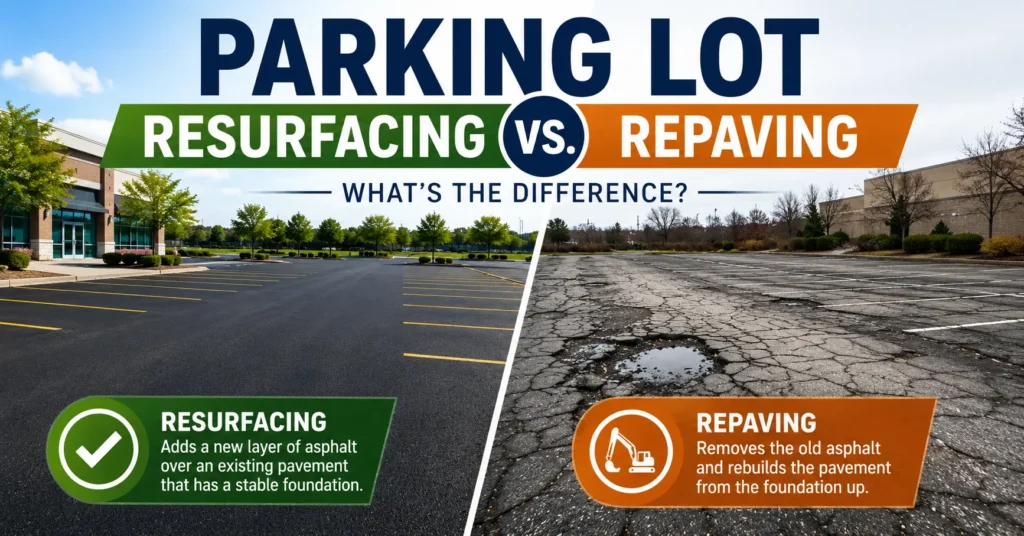
Parking Lot Resurfacing vs. Repaving: What’s the Difference?
Parking lot resurfacing adds a new layer of asphalt over an existing pavement surface, while parking lot repaving removes the old asphalt and rebuilds the pavement system underneath it. Resurfacing is generally used when the existing parking lot has a stable foundation but surface-level deterioration. Repaving is typically needed when cracks, potholes, settlement, drainage problems, or other damage indicate that the underlying pavement structure has failed.
The right choice depends on the condition of your parking lot, not simply its age or appearance. Understanding the difference between these two paving options can help property owners, facility managers, and business owners choose a solution that addresses the actual cause of pavement deterioration.
At Gallaher Seamless Paving, we help property owners throughout Northern Virginia evaluate their parking lots and determine the appropriate paving approach based on pavement condition and long-term performance.
What Is Parking Lot Resurfacing?
Parking lot resurfacing is the process of installing a new layer of asphalt over an existing parking lot. The existing pavement remains in place, while damaged areas are repaired and the surface is prepared before the new asphalt is installed.
Resurfacing is generally appropriate when the existing pavement has a stable structural foundation, but the surface has become worn, cracked, faded, or damaged. Instead of removing the entire parking lot, asphalt resurfacing renews the driving surface while making use of the existing pavement structure.
How Does Parking Lot Resurfacing Work?
A typical resurfacing project begins with an evaluation of the existing pavement. The contractor looks for cracks, potholes, rutting, drainage issues, settlement, and other signs of deterioration.
The process can include:
- Pavement inspection: The existing asphalt and underlying conditions are evaluated.
- Surface repairs: Potholes, damaged areas, and significant cracks are repaired.
- Surface preparation: The existing pavement is cleaned and prepared for the new asphalt layer.
- Asphalt overlay: A new layer of asphalt is installed over the prepared surface.
- Compaction: The new asphalt is compacted to create a smooth, stable pavement surface.
Proper preparation is critical. Resurfacing is not intended to cover up a failed foundation. If the pavement underneath the overlay is unstable, the same problems can eventually affect the new asphalt.
When to Resurface a Parking Lot
Resurfacing can be a practical option when deterioration is primarily limited to the pavement surface and the underlying structure remains stable.
Signs that a parking lot may be suitable for resurfacing include:
- Surface wear and fading: Asphalt can become weathered and lose its appearance without having significant structural damage.
- Limited or moderate cracking: Some cracking can be repaired before the asphalt overlay is installed.
- Localized potholes: A small number of isolated potholes does not necessarily mean the entire pavement system has failed.
- Stable pavement: The parking lot remains relatively level without widespread sinking or deformation.
- Sound foundation: The underlying base continues to provide adequate support.
- Proper drainage: Water drains away from the pavement without persistent ponding or moisture-related deterioration.
The condition of the foundation is one of the most important factors. A parking lot can have visible surface damage and still be a candidate for resurfacing if the underlying pavement structure remains strong.
What Is Parking Lot Repaving?
Parking lot repaving is a more extensive process that involves removing deteriorated asphalt and rebuilding the pavement before installing new asphalt.
Unlike resurfacing, repaving provides an opportunity to inspect and address problems within the pavement foundation. If the existing base or subgrade has become weak or unstable, those areas can be repaired before the new asphalt is installed. Repaving is generally considered when pavement deterioration has progressed beyond the surface.
How Does Parking Lot Repaving Work?
The exact process depends on the condition of the existing parking lot, but a repaving project can include:
- Site evaluation: The pavement, drainage, grading, and underlying conditions are assessed.
- Existing asphalt removal: Deteriorated asphalt is removed from the parking area.
- Foundation inspection: The underlying aggregate base and subgrade are examined.
- Foundation repairs: Weak or unstable areas are repaired, replaced, and properly compacted.
- Drainage and grading work: Problems affecting water movement can be addressed as part of the reconstruction.
- New asphalt installation: Fresh asphalt is placed over the properly prepared foundation.
- Compaction and finishing: The new pavement is compacted and finished to provide a stable driving surface.
Because repaving addresses the pavement system from the foundation upward, it is better suited to parking lots where structural deterioration is widespread.
When Does a Parking Lot Need Repaving?
Asphalt repaving may be necessary when existing pavement problems extend beyond the surface and repairs are no longer addressing the underlying cause.
Several conditions can indicate that full repaving deserves consideration.
Widespread Alligator Cracking
Alligator cracking consists of interconnected cracks that form patterns similar to reptile skin. When this type of cracking covers significant portions of a parking lot, it can indicate that the pavement structure is no longer providing adequate support.
An asphalt overlay may cover these cracks temporarily, but it does not correct the structural problem causing them.
Recurring Potholes
Potholes that repeatedly return after repairs can indicate deterioration below the surface. If the underlying base is weak or moisture has compromised the pavement structure, patching the surface alone may not solve the problem.
Settlement and Rutting
Depressions, sinking areas, and deep wheel-path ruts can point to problems with the base, subgrade, drainage, or traffic loads. Widespread deformation can indicate that the pavement structure is no longer providing adequate support.
Foundation Failure
If the aggregate base or subgrade has deteriorated, become unstable, or lost its ability to support traffic, repaving may be necessary. Removing the existing pavement allows these underlying problems to be addressed before new asphalt is installed.
Serious Drainage Problems
Water is one of the major causes of asphalt deterioration. Persistent ponding, poor runoff, or water entering the pavement structure can accelerate damage. If drainage problems have contributed to structural failure, they should be corrected as part of the paving work.
Extensive Pavement Deterioration
When cracking, potholes, settlement, rutting, and other failures affect large portions of the parking lot, repaving may provide a more appropriate long-term solution than placing another layer over deteriorated pavement.
Parking Lot Resurfacing vs. Repaving: Side-by-Side Comparison
The main difference is the condition of the existing pavement and how much of the pavement system needs to be rebuilt.
| Factor | Parking Lot Resurfacing | Parking Lot Repaving |
| What it involves | New asphalt layer over existing pavement | Existing asphalt removed and pavement rebuilt |
| Best for | Surface deterioration with a stable foundation | Significant structural deterioration |
| Foundation condition | The existing foundation must remain sound. | A damaged foundation can be repaired or rebuilt. |
| Construction scope | Repairs, preparation, and asphalt overlay | Removal, foundation work, and new asphalt |
| Project time | Generally shorter | Generally longer due to additional site work |
| Drainage | Existing drainage should be functioning properly or corrected first | Provides an opportunity to address grading and drainage |
| Long-term performance | Depends heavily on the existing pavement structure | Starts with a rebuilt pavement system |
The simplest way to remember the difference is: Resurfacing renews the pavement surface. Repaving rebuilds the pavement system.
How to Choose Between Resurfacing and Repaving
The decision should not be based solely on how old your parking lot is or how it looks from the surface. Two parking lots of the same age can have very different pavement conditions because of differences in traffic, drainage, soil conditions, construction, and maintenance.
Before choosing between asphalt resurfacing and repaving, consider:
- The type and extent of cracking
- The number and severity of potholes
- Signs of settlement or sinking
- Rutting and pavement deformation
- Condition of the underlying base
- Drainage and water movement
- Traffic volume and vehicle loads
- Previous repairs and whether they have solved recurring problems
- Overall pavement condition
For example, an older parking lot with limited surface deterioration and a stable foundation may still be suitable for resurfacing. In contrast, a parking lot with extensive cracking, recurring potholes, settlement, or foundation problems may require repaving even if the pavement is not particularly old.
A professional pavement assessment is the best way to determine which option fits the condition of your parking lot. Evaluating the pavement beneath the surface can help identify whether an overlay is appropriate or whether the existing pavement needs to be rebuilt.
Resurfacing or Repaving? Start With the Pavement Condition
The decision between parking lot resurfacing vs repaving comes down to the condition of the entire pavement system.
If the foundation is stable and deterioration is mainly limited to the surface, resurfacing can restore the driving surface and extend the useful life of the existing pavement. If the parking lot has widespread structural cracking, recurring potholes, settlement, rutting, foundation failure, or serious drainage problems, repaving may be the more appropriate solution.
The goal is to address the source of the deterioration rather than simply cover visible damage.
At Gallaher Seamless Paving, we help property owners and managers throughout Northern Virginia evaluate their parking lots and determine the right approach for long-term pavement performance. Our recommendations are based on the actual condition of the pavement and the needs of the property.